
Ion exchange membranes are membranes that enable ions to pass selectively. They can be divided into cation exchange membranes and anion exchange membranes. In cation exchange membranes, there are fixed negative charged functional groups, so anions can not pass through in solution because of their repulsion,only cations can be used. Anion exchange membranes can selectively pass anions by using the opposite action. The selectivity of ion exchange membranes is achieved by DC electric field force of electrodialysis.
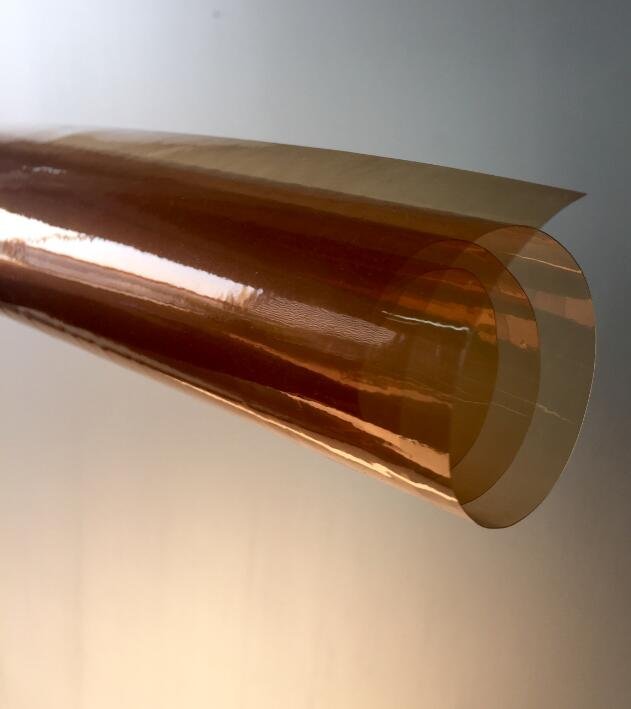
Our Homogeneous Anion-Exchange membranes are ion-exchange membranes formed by chemical modification or physical cross-linking of a single polymer material, and their chemical and physical structures are consistent in all directions. The porosity and pore size distribution of this membrane are uniform, with no composite layers. Functional groups (anion exchange groups) are uniformly distributed in the polymer matrix, and the ion channels are continuous.
Precautions:
1. Storage conditions:
The anion exchange membrane is supplied in a dry state. Its characteristic is that it is prone to absorbing water and curling in a humid environment. For better use, please store it in a dry environment after receiving the goods and try to avoid the membrane getting damp. In addition, during the usage process, it is advisable to operate under dust-free conditions as much as possible, wear gloves, and avoid contamination by dust particles, which may affect the performance of the membrane. Also, when using or cutting, please be careful not to fold the film to prevent local damage to it.
2. Pretreatment
When the anion exchange membrane is in the shipping state, the counterion is chloride ion. It is used in fuel cells, water electrolysis, and carbon dioxide reduction tests. The membrane needs to be immersed in 1M KOH at 60℃ for 24 hours to exchange chloride ions into hydroxide ions, thereby achieving a high OH- transport efficiency. After the ion exchange is completed, it should be used promptly or placed in a sealed deionized water immediately. Avoid carbon dioxide in the air carbonating OH-.
3. When used for alkaline water electrolysis, it can also be directly assembled by dry method. Before testing, activate it with flowing 1M KOH at 60℃ for 24 hours, or activate it with a small current under power generation conditions for 24 hours (not exceeding 1A/cm ²), and then replace the alkaline solution, subsequent tests can then be carried out.
Technical Specifications(Reference Standard):
Type |
Thickness |
Tensile strength |
Elongation at break |
Swelling rate (80℃) |
Water content (80℃) |
conductivity (25℃) |
conductivity (80℃) |
SYA80 |
80μm |
50Mpa |
30% |
8% |
55% |
40mS/cm |
120mS/cm |
Remarks: the width of our membrane is 20cm--55cm
Applications:
Our Homogeneous Anion Exchange Membrane is particularly suitable for use for electrolysis in the following fields
Packing:
Width: 20cm--55cm